


Dark Circles under the Eyes
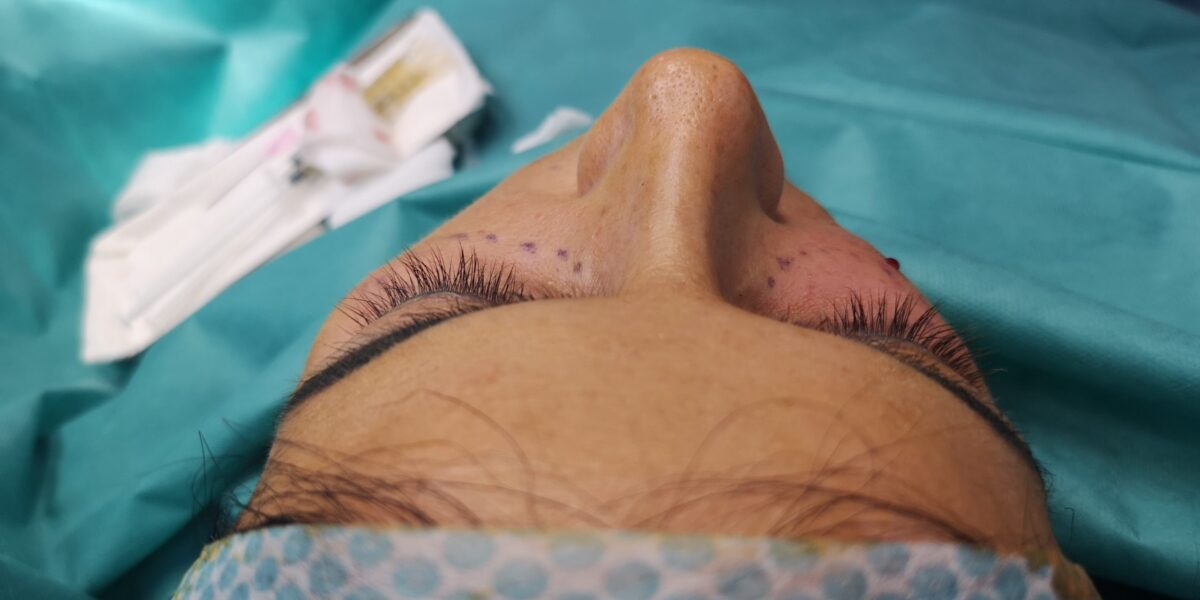
Dark circles under the eyes are caused by thinning skin that reveals underlying blood vessels, natural shadows from facial structure, or excess pigmentation. While fatigue can worsen their appearance, they are largely driven by genetics, aging, allergies, and sun exposure rather than just a lack of sleep.
The periorbital area has the ability to express our emotions, energy levels and health, or our age. When we have excess skin under the eyes, we unwillingly communicate a different state of mind and health to those around us.
Under-eye pubbiness is the most common aesthetic problem of the periocular area, caused by the herniation of the orbital fat. However, there is a category of patients whose problem is the concavity of this area and the accentuation of the “tear lines” or the presence of dark circles (periorbital melanosis).
Patients with dark circles complain of dark blemishes under the eyes, tired eyes, the appearance of aging under eye skin, unaesthetic concave areas. The attractiveness of the lower eyelid translates into a smooth transition between the infraorbital area and the zygomatic region.
The causes are usually cumulative and include:
- Fatigue and dehydration
- Excessive exposure to the sun
- Aging – which causes the collagen fibers to thin and fade. This then emphasizes blood vessels in the area, making it appear much darker in color.
- Genetic predisposition. People with dark skin are more prone to hyperpigmentation under the eyes.
- Post-inflammatory hyperpigmentation caused by an atopic or allergic contact dermatitis
- Periorbital edema
- Superficial vascularization due to a thin and lax skin
Treatment for the dark circles unde the eyes
Chemical peeling for the sensitive area around the eyes, for depigmentation.
A filler (hyaluronic acid) intended to fill the circles offers a temporary but effective solution in correcting dark circles around the eyes. The procedure is performed in the doctor’s office, after applying an anesthetic cream to increase your comfort. The effect is immediately visible and lasts (depending on the product and how each of us metabolizes it) for 3 to 12 months. After the procedure, I recommend the local application of cold patches or gels, or Arnica gel. You should rest your head on a stack of pillows when sleeping on the first night after the injection. This helps reducing the intensity of post-procedure edema. Inflammation will peak on day 1-2, when the injected area will be swollen and show slight sensitivity. Edema (swelling) fades starting with the 3rd day.
Lipofilling – fat is harvested from your thighs, abdomen, arms, back of the knees, etc. The effect of the procedure lasts longer compared to the injection of hyaluronic acid. Although the effect of fat injection is more natural and cost-effective over time, it is an invasive procedure, therefore it has higher risks than injecting hyaluronic acid. The grafting of adipose tissue in the infraorbital area also has regenerative effects due to the presence of stem cells in adipose tissue.
Lipofilling has much more efficient and spectacular results when it is associated with the repositioning of the infraorbital fat, which results in filling and reshaping the area under the eyes.
For a long-term result and to increase the chances of fatty tissue grafting, the adipose tissue is mixed with PRP (platelet rich plasma).
The addition of stem cells provided by the adipose tissue and the enriched stem cell (PRP) plasma will ensure a faster recovery and better skin quality in the infraorbital region.
The lipofilling procedure
The procedure is performed in the operating room under local anesthesia, sedation or general anesthesia. This aspect is decided depending on the size of the area to be filled and your ability to tolerate the pain and stress of the intervention.
Lipofilling can be done at the same time with other facial procedures: upper, lower blepharoplasty, eyebrow lift, midfacelift, facial lift, etc.
The fat is harvested with the help of very thin cannulas from the areas that we discuss preoperatively. You must not confuse this procedure with a liposuction! (the amount of aspirated adipose tissue is lower than that obtained from liposuction).
Lipofilling also has regenerative properties, due to the presence of stem cells in the adipose tissue. The resorption rate of the infiltrated fatty tissue ranges between 30-70%. Adding PRP (platelet rich plasma) increases the chances of survival of adipocytes.
The expected result of the procedure is to:
- fill the holes and depressions of the face,
- and offer a better quality of the skin for a long period of time, using your own cells.
Once the fat is harvested, it is filtered and mixed with the PRP. Plasma is obtained by collecting 6-8 ml of venous blood, which is centrifuged. The solution obtained is rich in platelets and growth stimulants. It is then mixed evenly with the prepared fat. The substance will be injected into the desired areas (under eye dark circles, cheekbones, nasolabial grooves, forehead, jaw line, etc.).
The immediate postoperative appearance will include swelling of the injected areas, ecchymosis, overcorrection.
The overcorrection aims to ensure that during the (absolutely normal) process of resorption of the injected fat, the final effect will be as close to your wishes as possible.
Recovery after a lipofilling procedure
The donor area will also be swollen and possibly bruised, but these issues disappear within the next 5-7 days.
At home you will have to take the prescribed treatment – antibiotic, anti-inflammatory drugs. You will massage the fat-infiltrated area using Lioton gel / Alle gel. You should sleep using a stack of pillows, to reduce edema in the face.
You will apply cold patched / cold gels / ice packs to the swollen areas.
After 14 days the wires used to suture donor areas will be removed.
I recommend taking three days off to rest after the procedure, which will allow partial remission of edema and ecchymoses.